Before Rerouting Codex to GPT-6.1 Sol, Run Four Backlog Tasks
Run four backlog tasks, log billed tokens and wall-clock time, then compare cost per finished task before moving Codex to GPT-6.1 Sol.
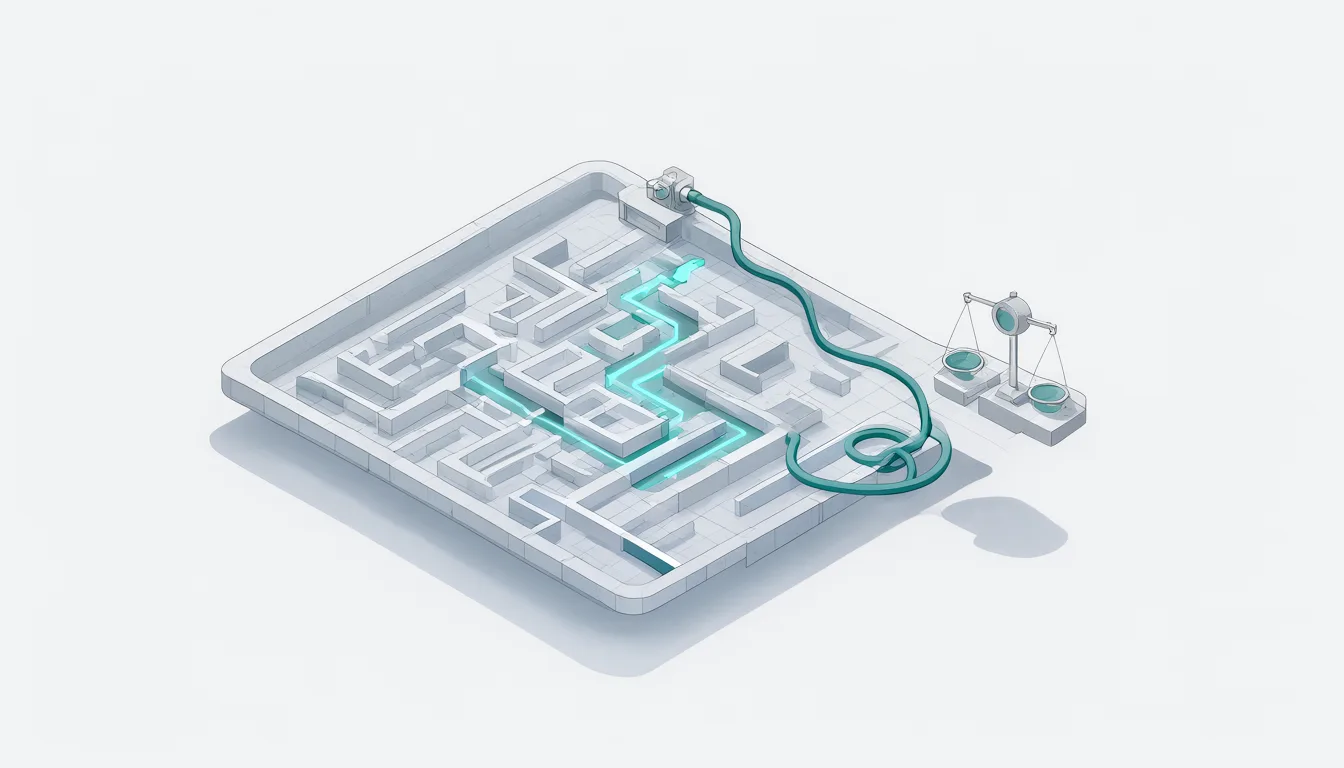
Your Codex agents are already paying for every token in the background queue. GPT-6 Astra is listed at $10 per million input tokens and $50 per million output tokens, and GPT-6.1 Sol's standard rates are one-fifth of both lines.
Do not reroute on that gap alone. The decision is whether your own high-volume work becomes cheaper after the switch, without losing quality or speed.
Sol's price gap is real, but it is not your cost
GPT-6.1 Sol launched on September 29, 2026, with standard API rates of $2 per million input tokens, $0.10 per million cached input tokens, and $10 per million output tokens. Cached-input pricing runs 95% below the standard input price and half the cached-input price of GPT-6 Sol. The context window is 1.05 million tokens, and the maximum response length is 128,000 tokens.
In Artificial Analysis' September 29 comparison, GPT-6.1 Sol scored 51.8 on the Intelligence Index at maximum effort, versus 52.7 for Astra, with estimated task costs of $0.72 and $3.26. On DeepSWE v1.1, Sol matched Astra at roughly one-fifth the cost and beat GPT-6 Sol's best score by 6.4 percentage points. On OSWorld 2.0's offline set, Sol beat GPT-6 Sol by seven percentage points at under half the cost; Astra led by only 2.1 percentage points, and Sol's per-task cost was about one-seventh as high.
GPT-6 Sol's case was built on the price of a successful task, not on benchmark totals by themselves. GPT-6 Sol and Luna were compared with Claude Fable 5.1 and Claude Opus 5, so the two launches did not line up as a direct head-to-head. A public same-harness result had not yet settled which of GPT-6 Sol or Claude Opus 5.5 delivers the cheaper successful task.
Run the same harness on four backlog tasks
The test is small on purpose. It is a cost check for the work you actually pay for, and a real-world test for the coding models in your queue.
Keep the rule: compare cost per finished task, not per token.
- Pick four backlog tasks that represent your volume. Done means a short list with task IDs, expected output, and a pass/fail rule.
- Freeze the prompt, tools, effort setting, and timeout. You are ready when the same harness runs both models, with no manual nudges.
- Run each task on the current model and on GPT-6.1 Sol. Finish when each task has two completed runs, or a logged failure.
- Log billed input, cached input, output tokens, wall-clock time, retries, and pass/fail. Your table is complete when every row has a number or a reason for failure.
- Compute token burn per task, then the cost per finished task. You have a dollar figure for each task and model. Failed runs stay in the log, but they are excluded from the pass rate.
- Decide only if quality and speed hold.
If one task is a fluke, rerun it once before you trust the number. If the model fails in a new way, note the failure mode. A cheaper model that breaks your build pipeline is not cheaper.
List price is not the decision
Anthropic said Claude Sonnet 5.5 can trim total task cost by up to 30% through fewer tokens and tool calls, not through a lower API sticker price. Base44 found that across 118 real application builds, Claude Sonnet 5.5 matched Claude Opus 5 with an average of 3.6 iterations per build, versus 7.7 for Opus 5, and it had the fewest failed tool calls among the compared models. Yashodha Bhavnani, Box's VP of AI Products, said the newer Sonnet 5.5 was more accurate, 2.4 times faster, and used 12% fewer total tokens than the prior model.
For agents, cached input pricing matters because the same repo, tests, and tool output can be resent many times. GPT-6 Sol's standard API price was listed at $2 per million input tokens and $10 per million output tokens, the same listed price as Claude Sonnet 5.5. With GPT-6.1 Sol at the same standard lines, Sonnet 5.5 versus GPT-6.1 Sol is a price tie. If your harness reuses context, the cached line can move the cost more than the headline input rate.
If the four-task log does not show a lower billed cost per finished task for Sol, keep the current model. Rerun the test after your next prompt or harness change.